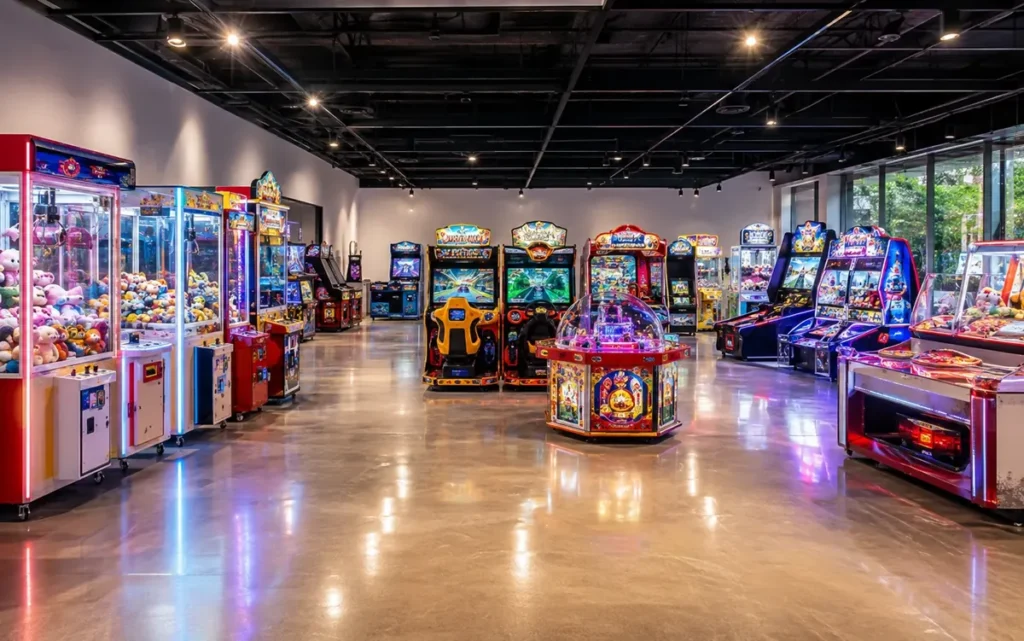
Buying the first set of machines is only the beginning. Once a venue opens, actual play and maintenance records can show which experiences deserve more space, better placement, or a different operating approach. A weekly review can be simple enough for a small arcade corner and still useful for a larger family entertainment center.
Record the same few numbers every week
Start with plays or paid transactions by machine, gross receipts, prize or consumable costs, payment fees, downtime, and service incidents. Record the number of operating days and any major changes in opening hours. For prize machines, note replenishment and the cost of prizes actually dispensed rather than treating every purchase of stock as that week’s cost.
Use the same reporting period for each machine. A newly installed cabinet with only three days of operation should not be compared directly with a machine open for seven days. Keep data definitions consistent so trends are meaningful.
Separate popularity from contribution
A machine can generate many plays yet require expensive prizes or frequent service. Another may have fewer plays but low operating costs. Review gross receipts alongside direct costs, downtime, and the space each cabinet occupies. If you use rent or revenue share, include those venue costs when assessing the whole location.
Our payback calculation guide explains how to build a planning model. Weekly operational data helps replace the assumptions in that model with your own observations.
Look for patterns by time and location
Compare weekdays with weekends, school holidays with ordinary weeks, and morning with evening if your payment system provides that detail. A game near the entrance may draw more attention because of its position, while a quieter machine may be hidden rather than unwanted. Note promotions, prize changes, or equipment moves in the same log as the numbers.
Do not decide that one week proves a trend. A fault, unusual event, or short holiday can distort results. Look across several comparable periods before changing the mix.
Test one change at a time
If a machine has low use, first check whether it is working, visible, priced clearly, and suitable for the audience. You might change signage, prize presentation, or placement before replacing it. Record the date of each change and compare later periods with the prior baseline.
For machines with strong demand, check whether queues block circulation or whether staff can keep up with refilling and cleaning. A high-play cabinet may need better service access rather than a duplicate immediately. Use customer questions and staff notes to explain what the numbers alone cannot.
Make a monthly equipment decision
At the end of each month, sort machines into three practical groups: keep and maintain; improve through placement, configuration, or presentation; and review for replacement. Write down the reason for each decision and the expected effect. Include maintenance lead time, spare parts, and the cost of moving a cabinet.
For a new venue, avoid a universal rule such as “replace the bottom 20%.” A machine may serve as a visual anchor or appeal to a customer group even if its direct receipts are modest. Judge it in the context of the whole customer journey.
Use the results for the next order
Share the patterns with your supplier: which game types get repeat plays, what payment issues occur, what footprint is comfortable, and which parts need attention. Ask for model-specific specifications and support terms for any new shortlist. Browse the arcade equipment catalog only after you know what role the next machine should fill.
Weekly records will not guarantee profit. They make your next layout, pricing, and purchasing decision less dependent on guesswork.