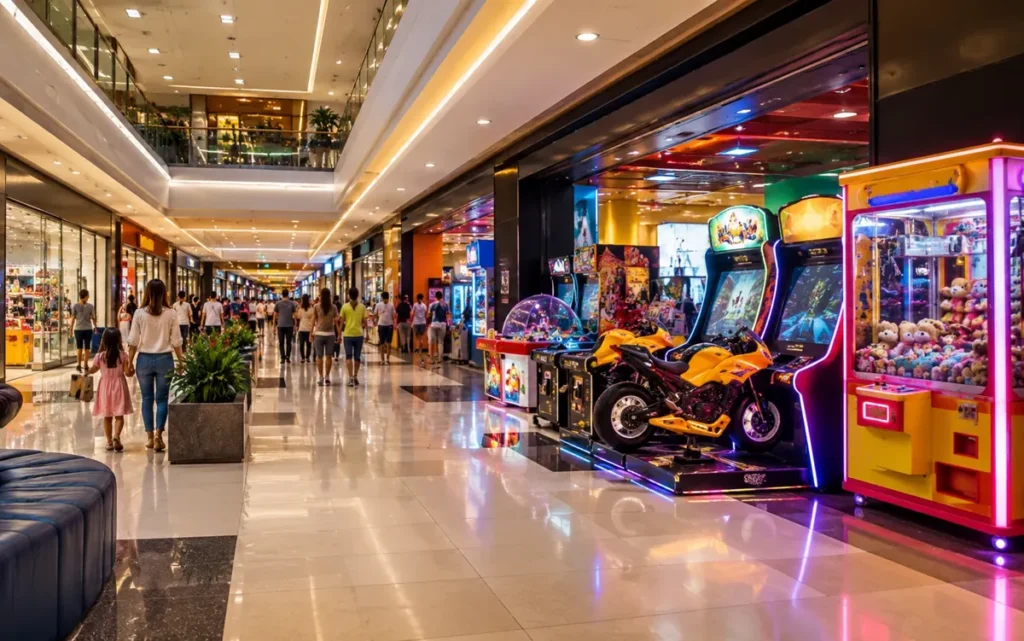
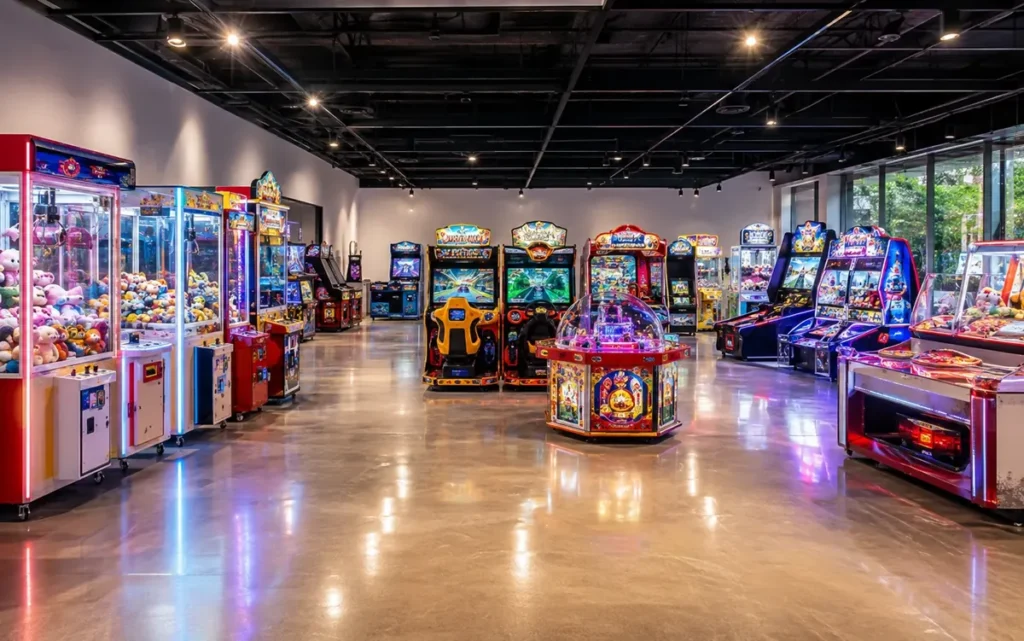
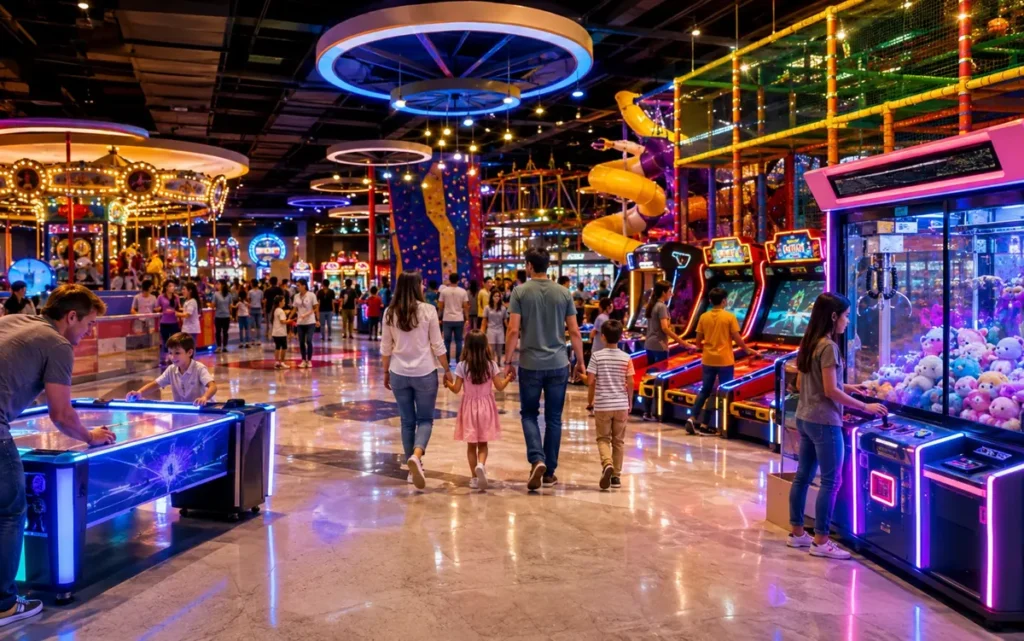
A mall arcade corner has a different job from a full family entertainment center. It must be easy to notice, simple to enter, and practical to operate within a limited footprint. The right mix depends on the mall’s traffic, lease rules, audience, and available power. This guide turns those constraints into a plan before you order machines.
Start with a measured site plan
Record the usable width and depth, columns, shopfront opening, ceiling height, power outlets, and any sprinkler or service access. Mark the clear path people need to walk through or around the corner. Ask mall management about sightline, signage, sound, operating hours, and fire or accessibility requirements. Local approvals should be checked with the property manager and the relevant authority.
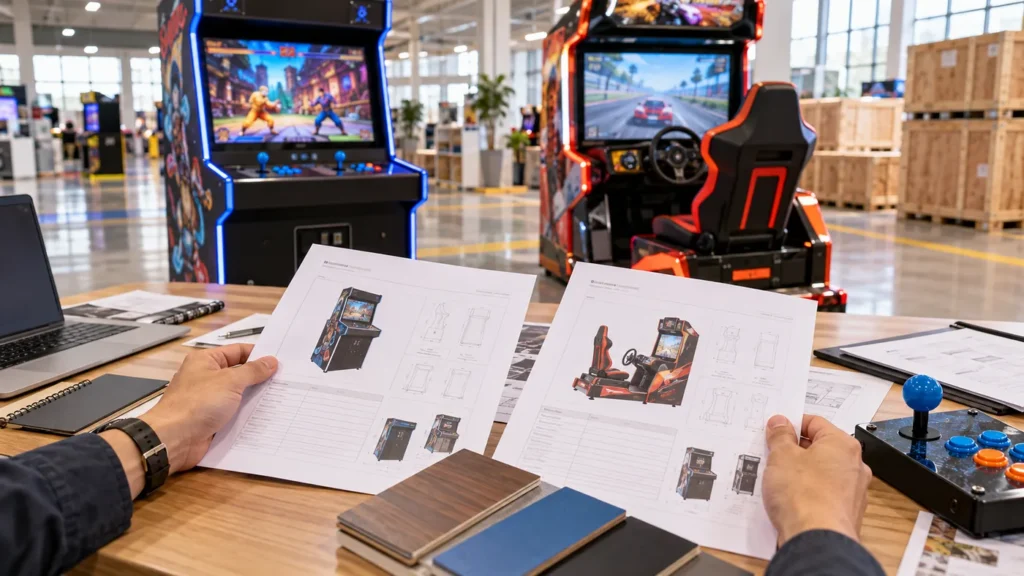
Draw each cabinet using its actual operating dimensions, then add space for players, waiting companions, service access, and doors or prize hatches. A machine that fits on paper may still be awkward to refill or repair. Our broader arcade floor-layout guide covers larger venues.
Choose a clear role for every machine
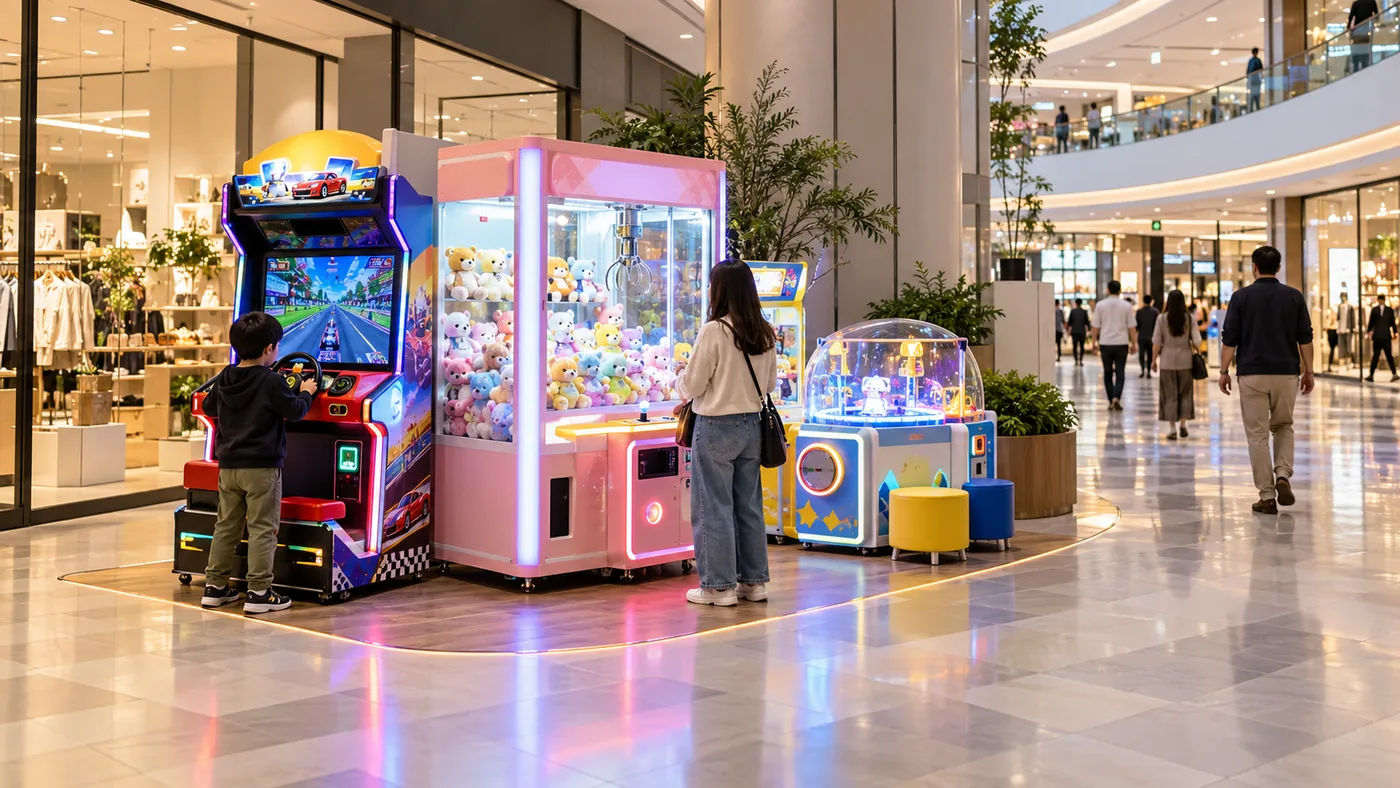
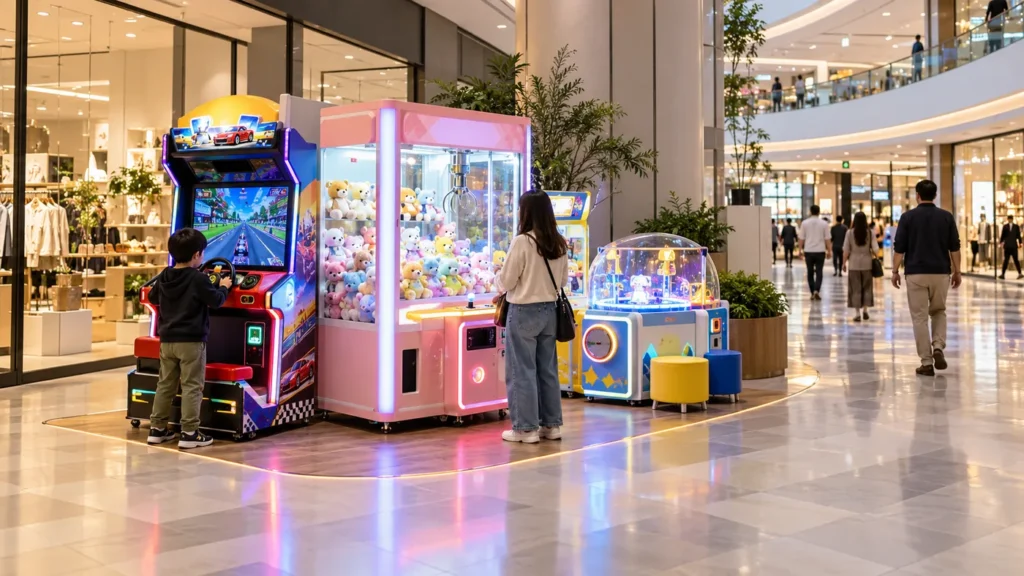
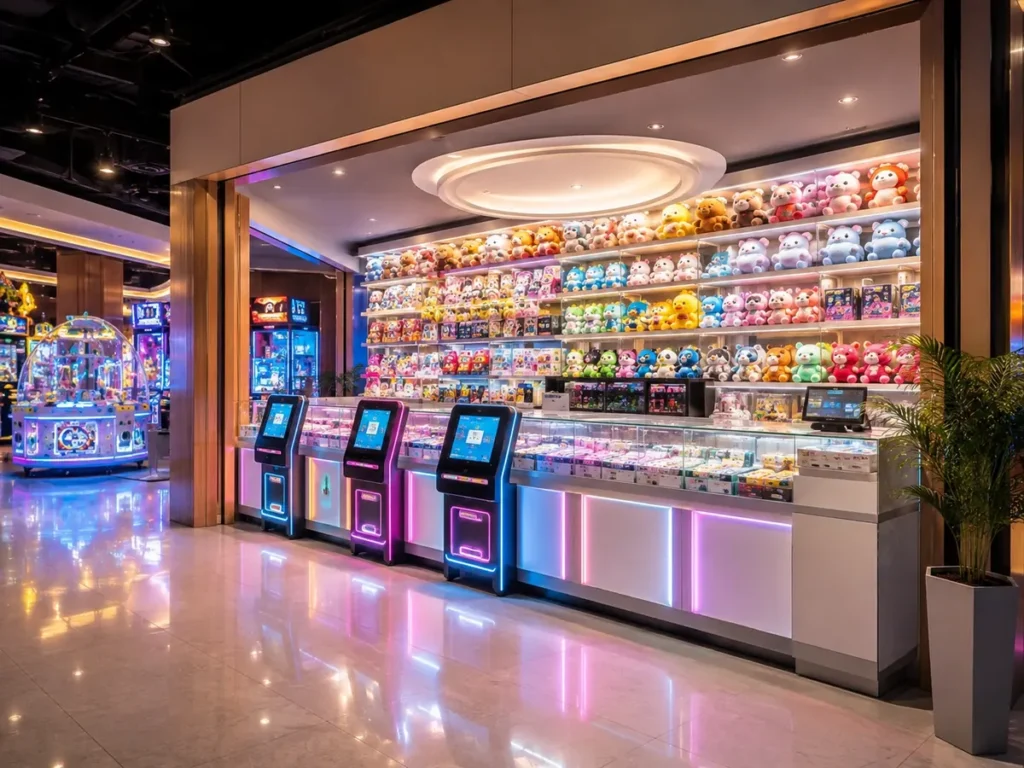
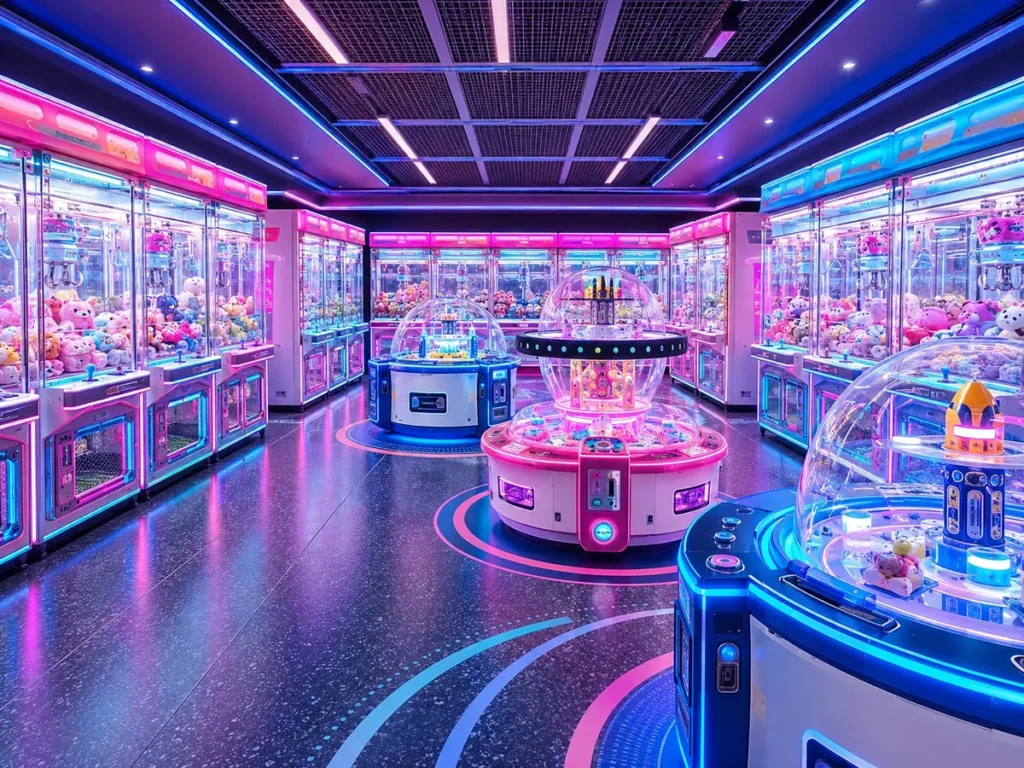
For a compact mall location, begin with a small number of complementary experiences. A claw or prize machine can provide a visible reward; a capsule toy machine can serve quick purchases; a compact video or sports game can add active play. Do not fill every available meter with equipment simply because it fits. Leave room for customers to understand where to start and for staff to replenish prizes safely.
Consider the expected visitor groups. Families with children may prefer accessible, easy-to-understand games. Teenagers and adults may spend more time with competitive play. Choose the mix from observed mall traffic, not from a universal percentage formula.
Design the first three seconds of the visit
Place one visually clear attraction where passersby can see it without blocking the corridor. Keep the offer and payment instructions legible from the approach. Use lighting and sound within the mall’s rules. A transparent machine with well-presented prizes can explain itself quickly; an unfamiliar game may need a short instruction sign.
Avoid hiding the payment point or prize collection opening behind another cabinet. For machines used by children, check reach height, adult supervision needs, and the path around open doors.
Plan operations before decoration
Decide who will refill prizes, empty or reconcile payments, clean surfaces, respond to faults, and monitor stock. Keep a small, secure place for consumables and spare parts if the lease permits it. If the corner is unattended, consider how customers will report a problem and how quickly someone can respond.
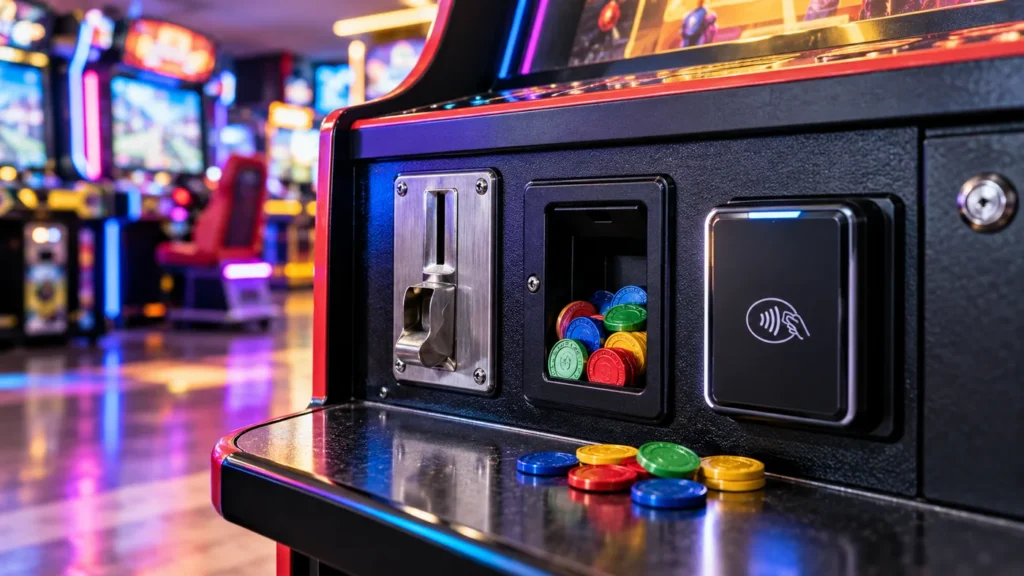
Ask suppliers for the power draw, service-clearance needs, payment options, packed dimensions, and spare-parts list of each shortlisted model. Confirm that your chosen payment system works with the exact machines and local network conditions. Browse available arcade equipment to create a shortlist, then obtain model-specific measurements.
Test a layout before committing to a full mix
Make a simple plan with cabinet footprints, player positions, queue space, and the route for restocking. Walk the site during both quiet and busy periods. Check whether customers can pause without disrupting mall circulation. If possible, start with a manageable assortment and track plays, downtime, prize use, and customer questions before expanding.
There is no guaranteed revenue from a particular layout. Rent, traffic quality, pricing, maintenance, and prize costs all affect the result. A practical first design makes the corner easy to see, easy to use, and easy to operate; then your own data can guide the next adjustment.